
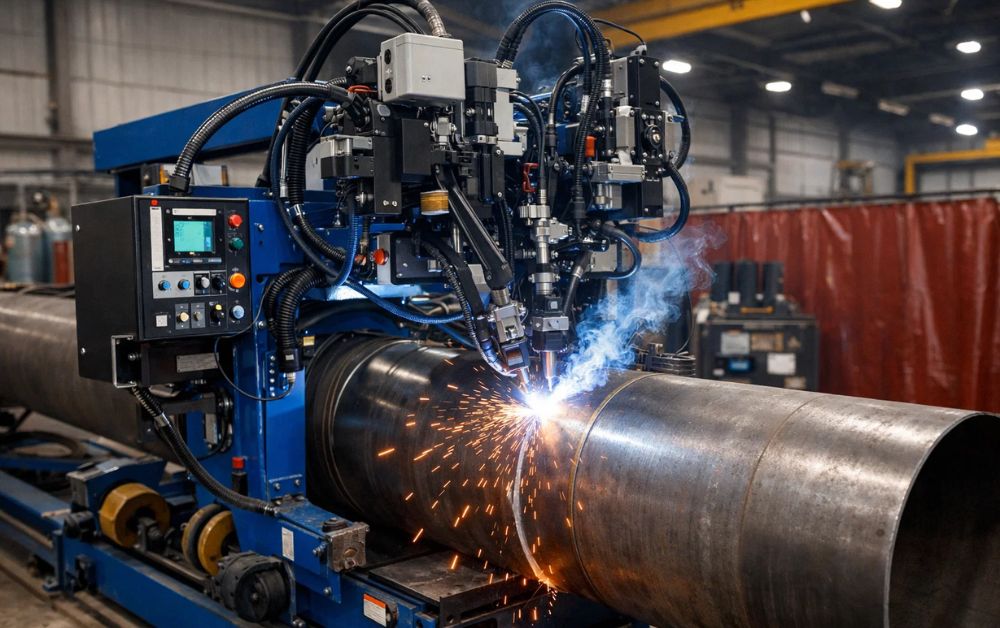
As a niche industry publication, it is interesting to see the rapid adoption of automation (particularly welding) within traditional olive industries—a deadly weapon to the welding industry. With robotics and automation shaping up on production floors, automatic welding equipment has changed the landscape for traditional manual welding options. For companies aiming for high productivity and uniformity, an automatic welding machine supplier in Dubai is a deal‑breaker. One such leader in this area is Raysun Techno Industries LLC, a firm identified with laser welding competence and engineering mastery. The cutting-edge automated technologies they employ are driving more and more businesses to automate across all industries.
The Growing Need for Automation in Welding
Welding, a central process in fabrication, construction, automotive, aerospace, and oil and gas (amongst others), is well known. In the past, these were done manually by expert welders. Manual welding has its perks — flexibility and the ability to handle custom jobs, among others — but it also comes with some serious limitations: varying quality levels, slower output times, and a heavy reliance on labour.
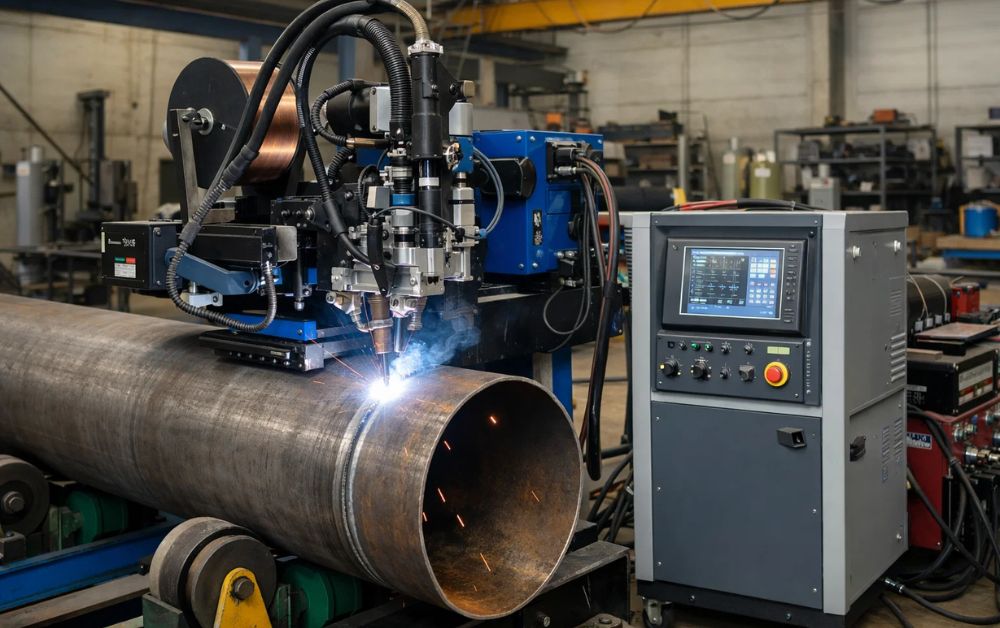
Automatic welding machines, on the other hand, are programmed to execute accurate, repeatable welds with very little human interaction. They are transforming production facilities by enhancing productivity, quality assurance, safety, cost performance, and other factors. Here’s why industries are turning to the alternative.
Advantages Driving the Shift to Automatic Welding
1. Superior Precision and Consistency
However, automatic welding’s most obvious advantage is its ability… to produce dependable welds. Unlike hand welding, in which results depend on the judgment and skill of an operator who may be tired or less experienced, automatic versions can call upon preset parameters to make sure each weld is perfect. This kind of accuracy is important when you work in fields with high-quality and safety requirements.
2. Increased Productivity and Speed
Robots weld very fast compared to human beings and will improve the speed of welding significantly. They perform endless welding cycles without feeling tired, so that more output is possible. For high‑volume projects or product lines, this translates into shorter lead times and higher capacity to achieve short runs.
3. Enhanced Safety for the Workforce
Welding itself creates intense heat, sparks bright light, and harmful fumes. Decisions are increasingly taken out of the hands of humans and assigned to automated systems, reducing the need for handling such risks in person and increasing the safety of individuals. It’s all designed to improve worker safety and health by putting the operators at a safe distance with machine enclosures and automatic controls.
4. Lower Long‑Term Costs
Although automatic welders have a higher upfront cost than manual systems, the investment is justified when it comes to overall savings. With less labor costs, lower rework rates, and reduced material waste, you get a nice return on investment — particularly in high-volume production.
5. Optimized Quality Control
Nowadays, automatic welding machines with sensors and control systems are finding wide application in real-time inspection of weld quality. These capabilities enable early detection of defects and assure quality, which minimizes expensive post‑weld inspections and rework.
Why Manual Welding Still Matters (But Is Losing Ground)
In some special or low‑volume applications, manual welding is still in demand because of its flexibility and lower investment cost. Experienced welders can work with challenging geometries and niche applications, which would require automated systems to be reprogrammed or set up specifically for the task. Nevertheless, these advantages are offset in high‑throughput setups where repeatability, speed, and safety are important.
The Role of Laser Welding and Advanced Automation
Companies such as Raysun Techno Industries LLC symbolize the move toward sophisticated welding automation. This is regularly used for industrial welding applications. Its team of experienced engineers and technicians provides both automatic and robotic welding solutions, assisting customers to reach high-level metal fabrication performance.
Laser welding generally provides ultra‑precise control with low heat effects and is extremely accurate, which often makes it perfect for complex or high-precision projects that would otherwise be difficult for manual welders. These types of solutions reflect the role that automation plays in increasing productivity and maintaining quality outcomes within a contemporary factory setting.
Success Stories and Real‑World Impact
Such automatic welding machines have proved invaluable in industries such as automobile assembly, pipeline laying, aerospace manufacturing, and oil-well equipment fabrication. Not only do they provide faster and more reliable results than manual methods, but they also guarantee in accordance with the most stringent industry standards. This is reflected in the offerings of leading suppliers and engineering houses, who support businesses in making the move smoothly from manual to automated welding.
Conclusion: A Future Fueled by Automation
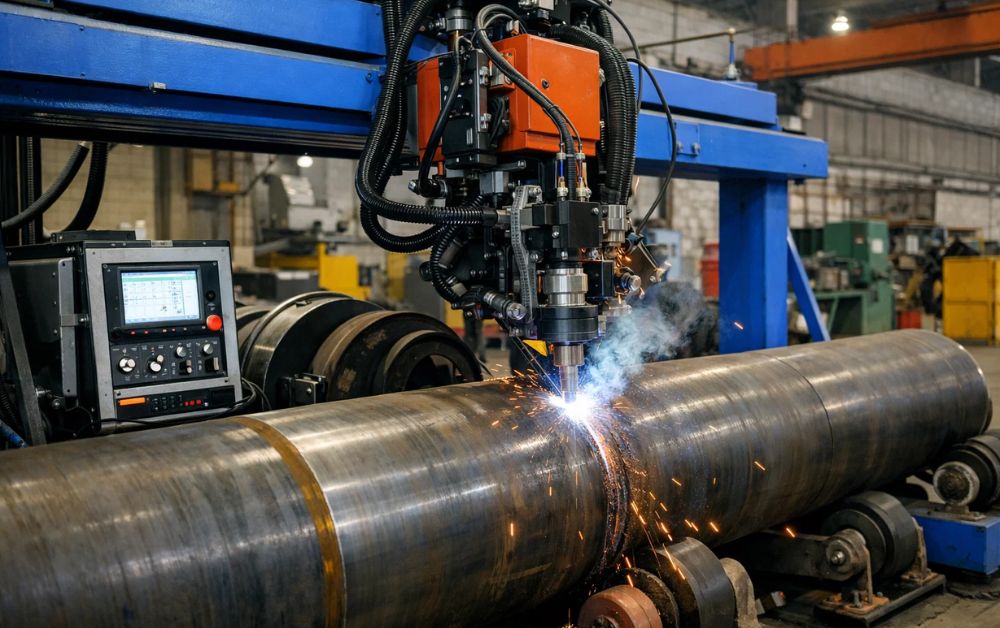
The shift from stick or semi-automatic MIG to orbital welding is not simply a trend; it’s an indication of changing priorities in industry today. Companies are being compelled by the requirement for accuracy, speed, productivity, and cost effectiveness to implement an automatic welding machine supplier in Dubai, which can provide worthwhile outcomes. Raysun Techno Industries LLC, the laser welding know-how manufacturer, continuously pursues its own excellence in engineering as your partner to utilize the complete advantages of welding automation.
With the continued progress of manufacturing technology, automatic welding machines will only increase and become the norm for high-quality, short turnaround production, cementing their place in industrial fabrication tactics.
