
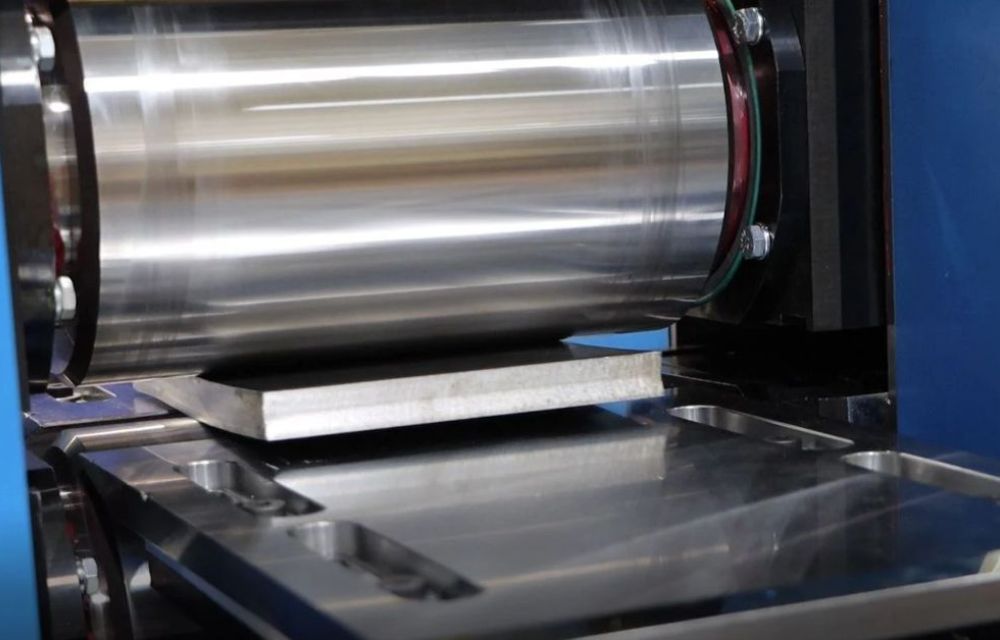
Steel is a fundamental material in industries such as construction, automotive, and manufacturing. To achieve the desired mechanical properties and surface finish, steel undergoes various processing techniques, one of which is cold rolling. This process plays a crucial role in enhancing the strength, durability, and overall quality of steel, making it suitable for high-performance applications.
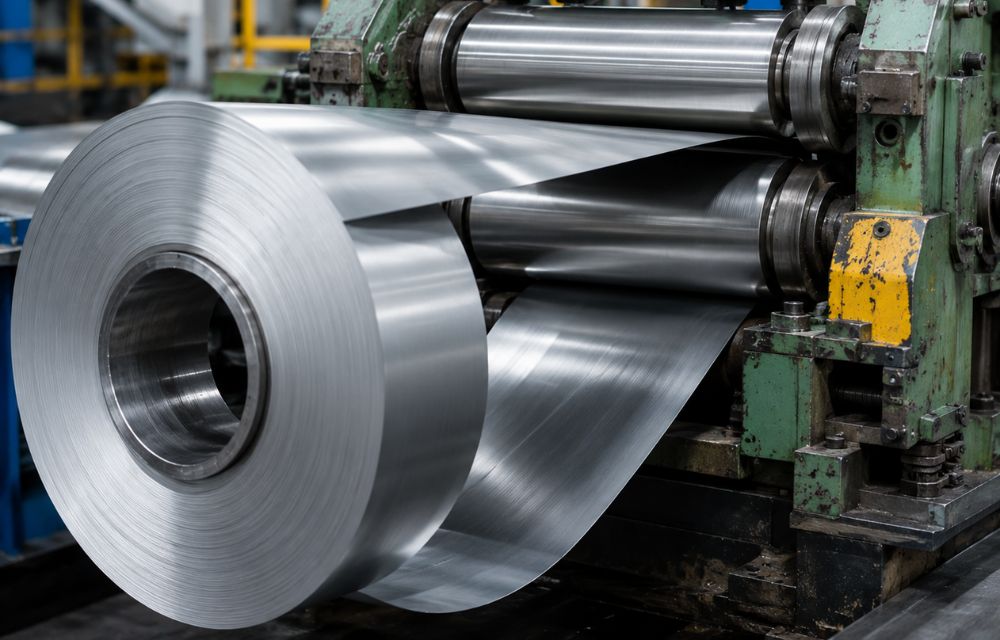
What Is Cold Rolling?
Cold rolling is a metalworking process in which steel is passed through rollers at room temperature to reduce its thickness and refine its surface finish. Unlike hot rolling, which involves heating the metal above its recrystallization temperature, cold rolling is performed without any heat application. The result is a harder, smoother, and more precise steel product with improved mechanical properties.
Key Benefits of Cold Rolling
1. Increased Strength and Hardness
One of the most significant advantages of cold rolling is the work hardening effect. As the steel is compressed and elongated through rolling, its grain structure becomes more refined, leading to higher tensile strength and hardness. This makes cold-rolled steel ideal for applications requiring durability and resistance to wear.
2. Improved Surface Finish
Cold-rolled steel has a smoother and more polished surface compared to hot-rolled steel. The absence of oxidation and scaling ensures a clean and uniform appearance, making it suitable for applications where aesthetics matter, such as home appliances, furniture, and automotive components.
3. Enhanced Dimensional Accuracy
The precision of cold rolling allows manufacturers to achieve tight tolerances and consistent thickness across steel sheets and coils. This accuracy is essential for industries that require uniformity in steel components, such as aerospace and electronics manufacturing.
4. Better Mechanical Properties
Cold rolling enhances steel’s yield strength, making it less likely to deform under stress. This is particularly useful in structural applications where high strength-to-weight ratios are needed. Additionally, cold-rolled steel exhibits improved fatigue resistance, extending the lifespan of finished products.
5. Increased Formability and Workability
Despite being stronger than hot-rolled steel, cold-rolled steel retains good formability. It can be easily bent, stamped, or drawn into complex shapes without losing its mechanical integrity. This makes it a preferred choice for producing intricate steel components in the automotive and manufacturing industries.
6. Cost Efficiency
Although cold rolling requires more processing than hot rolling, the enhanced properties of the final product lead to cost savings in the long run. Stronger, more durable steel reduces maintenance costs and extends the lifespan of structures and machinery.
Suggested Read – What is Cold Rolling and How Does It Differ from Hot Rolling?
Applications of Cold-Rolled Steel
- Automotive Industry – Used in car frames, panels, and structural components for improved strength and lightweight efficiency.
- Construction Sector – Ideal for steel beams, roofing sheets, and reinforcement bars.
- Home Appliances – Used in refrigerators, washing machines, and kitchen equipment due to its smooth finish and corrosion resistance.
- Machinery and Equipment – Provides durable and high-strength materials for industrial machines and tools.
Conclusion
For industries seeking high-quality cold-rolled steel, Raysun Techno Industries LLC delivers precision-engineered solutions that enhance steel strength, durability, and efficiency. With cutting-edge processing techniques and a commitment to quality, Raysun Techno Industries LLC ensures that businesses receive superior cold-rolled steel tailored to their specific needs.
