
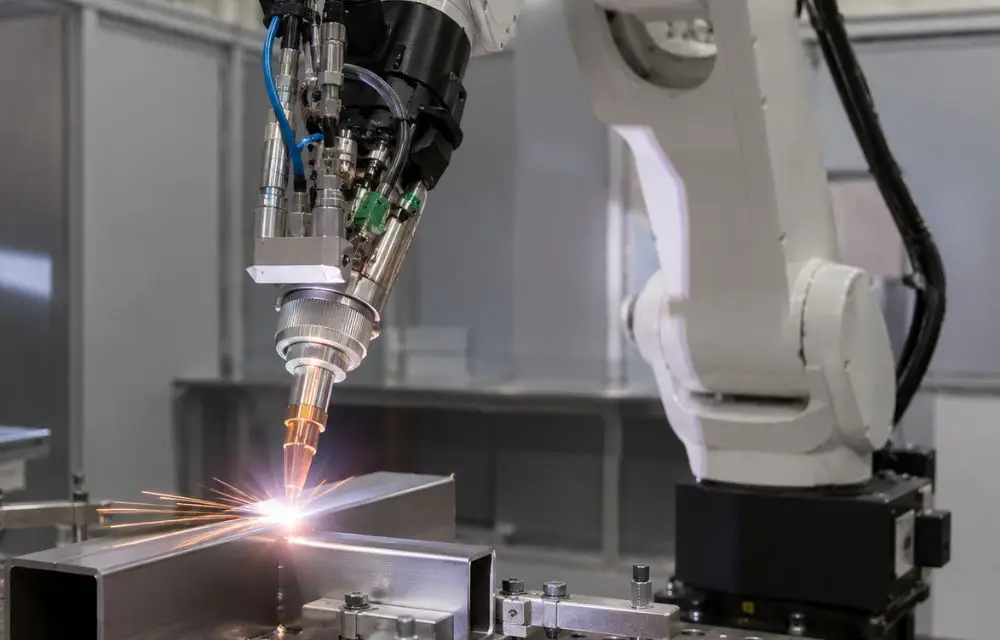
Manufacturing industries are constantly evolving to improve productivity, precision, and efficiency. One of the most advanced technologies transforming modern manufacturing is Robotic Laser Welding. This process combines the precision of laser welding with the automation of robotics, resulting in superior quality welds, increased production speed, and reduced operational costs.
Understanding Robotic Laser Welding
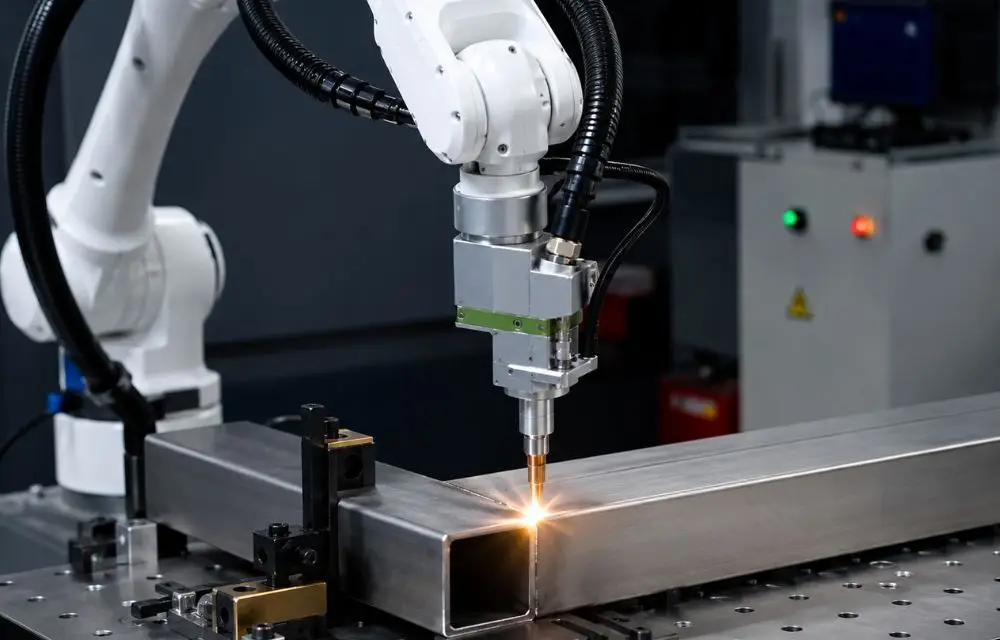
Robotic Laser Welding is a high-precision welding technique that utilizes a concentrated laser beam to join materials. The process is automated using robotic arms, which provide consistent and accurate welds, eliminating the risk of human error. This method is particularly beneficial for industries requiring intricate and high-strength welds, such as automotive, aerospace, electronics, and medical device manufacturing.
The laser beam generates intense heat, melting the metal surfaces and creating a strong fusion between them. Unlike traditional welding, robotic laser welding offers deep penetration with minimal distortion, making it ideal for delicate and high-strength applications.
Key Benefits of Robotic Laser Welding in Manufacturing
1. Unmatched Precision and Accuracy
Robotic arms equipped with laser technology ensure pinpoint accuracy, making it possible to weld even the smallest and most complex parts. The consistency of robotic movement eliminates welding defects, ensuring high-quality results every time.
2. Increased Production Speed
Automation allows Robotic Laser Welding systems to work faster than traditional welding methods. The high-speed laser beam can complete welds in a fraction of the time, significantly boosting production rates while maintaining quality.
3. Reduced Material Waste and Costs
Laser welding requires less filler material and generates minimal heat-affected zones, reducing material distortion and waste. This leads to cost savings in raw materials and post-welding treatments.
4. Enhanced Strength and Durability
The deep penetration capability of laser welding creates strong and durable welds. This is essential for industries that require components to withstand extreme conditions, such as automotive chassis, aircraft parts, and heavy machinery.
5. Versatility in Material Compatibility
Robotic laser welding is effective for a wide range of materials, including steel, aluminum, titanium, and even dissimilar metals. This flexibility allows manufacturers to work with various materials without compromising weld quality.
Also Read – Why Should You Consider Robotic Laser Welding for Your Production Line?
6. Improved Workplace Safety
Traditional welding exposes workers to intense heat, fumes, and harmful UV radiation. By automating the process, Robotic Laser Welding enhances workplace safety by reducing human exposure to hazardous conditions.
7. Seamless Integration with Smart Manufacturing
As industries move towards Industry 4.0, Robotic Laser Welding can be integrated with advanced sensors, AI-driven monitoring, and data analytics to optimize production efficiency. This real-time tracking helps identify potential issues and ensures consistent quality control.
Applications of Robotic Laser Welding
- Automotive Industry – Used for assembling car bodies, exhaust systems, and battery components.
- Aerospace Sector – Ensures high-strength welds for turbine components and aircraft structures.
- Electronics Manufacturing – Provides precision welding for small electrical contacts and circuit boards.
- Medical Devices – Enables micro-welding for surgical instruments and implants.
Conclusion
For businesses looking to enhance manufacturing efficiency with cutting-edge Robotic Laser Welding, Raysun Techno Industries LLC offers top-tier solutions. Their expertise in robotic laser welding ensures precision, speed, and durability, helping industries achieve superior weld quality and improved productivity. With advanced automation and innovation, Raysun Techno Industries LLC is a trusted partner in modern manufacturing excellence.
