
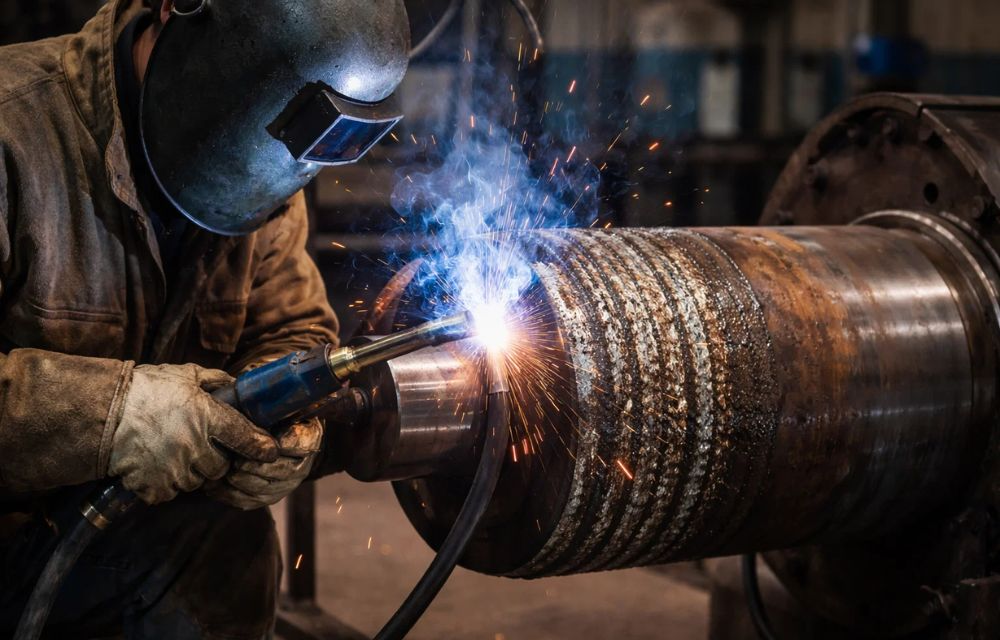
Hardfacing is a critical surface engineering technique used across industries to prolong the life of components subjected to high wear and tear. Whether it’s in mining, oil & gas, construction, or manufacturing, hardfacing helps enhance performance and reduce downtime by applying a harder or tougher material over a base metal.
In Hardfacing Welding Dubai, businesses often face a key question: should they opt for manual or automated hardfacing processes? Both methods offer unique advantages and limitations, and the right choice largely depends on the specific application, production volume, and quality expectations.
This blog explores the differences, benefits, and challenges of manual and automated hardfacing to help you make a more informed decision.
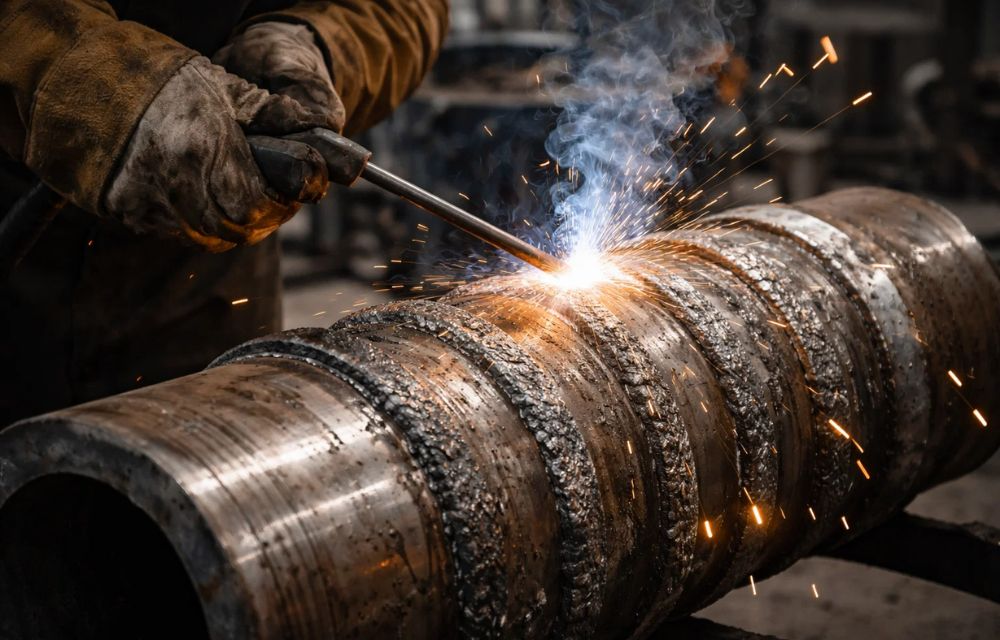
Understanding the Basics of Hardfacing
Hardfacing involves the deposition of wear-resistant materials (typically hard alloys) onto the surface of metal components through welding. The aim is to increase resistance to abrasion, impact, corrosion, or high temperatures.
There are various welding techniques used in hardfacing, including:
- Shielded Metal Arc Welding (SMAW)
- Gas Metal Arc Welding (GMAW/MIG)
- Flux-Cored Arc Welding (FCAW)
- Plasma Transferred Arc (PTA)
- Submerged Arc Welding (SAW)
In Hardfacing Welding Dubai, industries employ these techniques either manually or through automation based on the precision required and the scale of the operation.
Manual Hardfacing: Pros and Cons
Manual hardfacing involves skilled welders operating welding equipment by hand to apply the hardfacing material. This method is especially useful for repairs, prototypes, and low-volume jobs.
Advantages:
- Flexibility: Manual hardfacing is ideal for irregular shapes, hard-to-reach areas, and custom jobs that need human judgment and experience.
- Cost-Effective for Small Batches: There’s no need to invest in automation hardware for small production runs or one-off repair work.
- On-Site Repairs: Manual techniques are often portable and can be carried out directly at the job site, saving time and transportation costs.
Challenges:
- Operator Skill Dependency: The quality of manual hardfacing depends heavily on the experience and precision of the welder.
- Inconsistency: Manual processes may lead to variation in deposition rate, bead placement, and dilution, especially during extended tasks.
- Longer Turnaround Time: Manual welding is slower compared to automated processes, which can increase downtime in critical applications.
Automated Hardfacing: Pros and Cons
Automated hardfacing involves CNC-controlled or robotic systems to apply hardfacing materials consistently and accurately. It is increasingly popular in modern workshops and high-volume production environments.
Advantages:
- High Precision and Consistency: Automated systems provide uniform layer thickness and quality, minimizing errors and improving component longevity.
- Speed and Productivity: Machines can operate continuously at high speeds, reducing turnaround times significantly.
- Lower Long-Term Costs: Although the initial investment is higher, automation results in lower per-unit costs over time due to reduced labor and rework.
- Enhanced Safety: Automation reduces the exposure of workers to high heat, fumes, and arc rays, making it safer in the long run.
Challenges:
- High Initial Investment: CNC machines and robotic systems for hardfacing can be expensive to purchase and maintain.
- Limited Flexibility: Automated systems are ideal for repetitive tasks, but less suitable for complex geometries or small custom jobs without additional programming.
- Skilled Setup Required: Operators still need to be trained in programming, machine setup, and quality control.
Choosing the Right Hardfacing Approach for Your Application
Whether you should choose manual or automated hardfacing depends on various factors:
1. Application Type
- Manual: Best for repair work, irregular components, and custom or one-off jobs.
- Automated: Ideal for new parts, high-volume production, and applications demanding strict quality control.
2. Volume and Frequency
- Manual: Cost-effective for occasional tasks or low-volume runs.
- Automated: More efficient and economical for large-scale or repeat jobs.
3. Tolerance and Consistency
- Manual: Acceptable where small deviations are not critical.
- Automated: Necessary for industries requiring high precision (e.g., aerospace, energy).
4. Budget
- Manual: Lower upfront investment.
- Automated: Greater ROI in long-term with consistent production.
Also Read – How Can Hardfacing Welding Improve the Lifespan of Industrial Machinery?
Industry Insights: Hardfacing Welding Dubai Trends
In Hardfacing Welding Dubai, a trend toward automation is noticeable, particularly in sectors like oil & gas and construction equipment, where turnaround times and durability are crucial. However, manual hardfacing remains essential in workshops where flexibility and adaptability are key.
Hybrid approaches are also emerging, where initial passes are done manually, and finishing is automated to optimize quality and efficiency. This combination ensures better resource utilization and meets diverse client requirements.
With Dubai’s focus on infrastructure development and manufacturing growth, both methods are expected to see increased demand—but used more strategically depending on project specifics.
Conclusion: Excellence in Hardfacing with Raysun Techno Industries LLC
Selecting between manual and automated hardfacing is a decision that depends on your application’s needs, production goals, and quality expectations. In the dynamic landscape of Hardfacing Welding Dubai, one name continues to deliver excellence—Raysun Techno Industries LLC. Known for their precision, innovation, and client-focused approach, Raysun provides both manual and automated hardfacing services tailored to meet the toughest industrial challenges. With advanced equipment, skilled technicians, and a strong commitment to quality, Raysun Techno Industries LLC stands as a trusted partner for companies looking to extend equipment life and boost performance with confidence.
